International research collaboration · since 2026
Violin · Posture · Sound · Performance
Healthy Strings investigates posture, movement, playing technique, sound and physical strain in violin performance. Specialists from music physiology, violin pedagogy, physiotherapy, acoustics, movement analysis, sensor technology, biorobotics and data science develop shared ways of recording and analysing violin playing.
Find your way in
Scientists
Research aims, key questions, methods, current status, publications and the participating institutions.
For scientists →Health & Support
For musicians, teachers and therapists: what research says, healthy practice, professional societies and literature.
Health & Support →Physio experts
Well-known problems, the search for causes and video-based posture assessment.
For physio experts →Violin experts
The recording protocol with sheet music, how to record yourself and the pedagogical view.
For violin experts →Data analysis
Which tool for which question: SInES Tools, PyEyesWeb, SPD, VioPose – with a step-by-step guide for students.
For data analysts →Why it matters
Playing-related musculoskeletal complaints are common among professional musicians: a systematic review of 21 studies with 5,424 musicians reports point prevalences between 9 % and 68 % (Kok et al., 2016). Violinists’ complaints reach many medical specialties, so musicians’ health needs a multidisciplinary approach (Zinn-Kirchner et al., 2023).
No single “correct” posture. A recent scoping review of 135 studies shows that “posture” is defined in very different ways and that a link between “poor” posture and playing-related pain has not been clearly established (Rousseau et al., 2026). Healthy Strings therefore asks which asymmetries are functional for a player and a task – always together with the music, the sound and the individual.
How we work
Building a network
Music physiology, physiotherapy, pedagogy, acoustics, engineering and data science around one question.
Developing protocols
Shared recording tasks, camera views and assessment procedures that work at every site.
Two cameras and sound
Violinists record a short sequence of technical tasks and repertoire themselves.
Movement and sound
Markerless tracking from ordinary video, combined with intonation, dynamics and timbre.
Expert eyes and ears
Physiotherapists and violin teachers assess the same clips. The tools describe – they do not diagnose.
What makes Healthy Strings special
Healthy Strings builds on existing work at every partner site and brings this expertise together around one shared question.
- Vienna · mdwMotion-Emotion-Lab, Centre for Music Physiology
Music physiology, musical acoustics and multimodal measurement – home of the project coordination, the recording protocol and the video assessments. - Vienna · University of ViennaSInES Lab
The SInES Tools: more than 100 free, browser-based tools for audio and video analysis, including markerless pose tracking. - GenoaCasa Paganini – InfoMus
Decades of research on expressive movement and multimodal interaction; EyesWeb and PyEyesWeb; the violin corpus of the EU project TELMI. - PisaThe BioRobotics Institute, Sant’Anna
Biorobotics, artificial touch, wearable sensors and motion capture. - OsnabrückUniversity of Applied Sciences, INAP/O
Physiotherapy for musicians: 3D kinematics and EMG in upper string players, a prospective cohort of music students, a clinic for musicians. - SydneyThe University of Sydney
Performing arts health: musicians’ physiotherapy, the reliability of expert video ratings and health programmes for orchestras. - LuccaConservatorio Boccherini · IMT Lucca
Violin performance and pedagogy with student and professional players; machine learning and data science. - AustriaÖGfMM – Working Group Science
The Austrian Society for Music and Medicine hosts Healthy Strings and connects it with musicians’ medicine in Austria.
The team
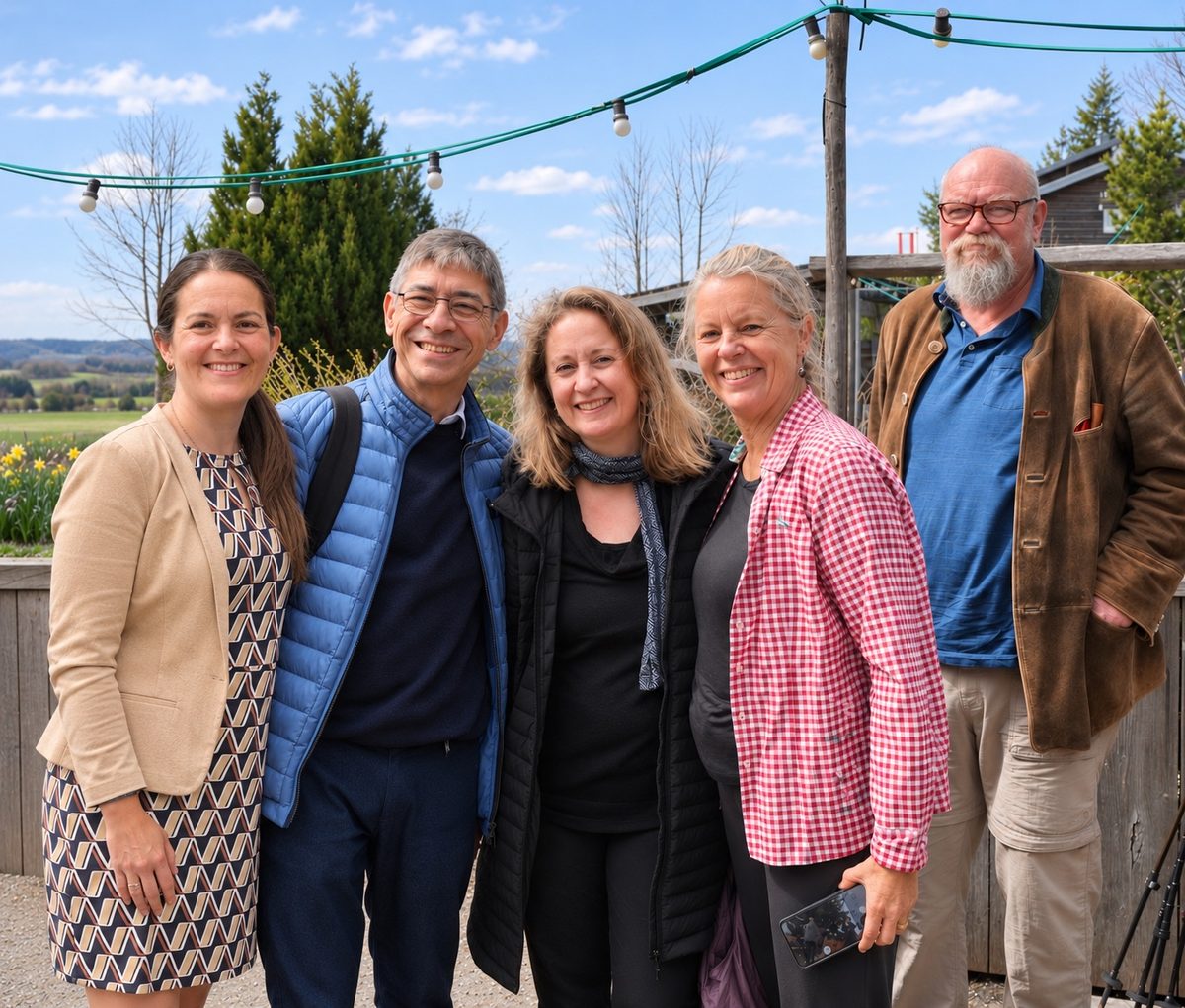
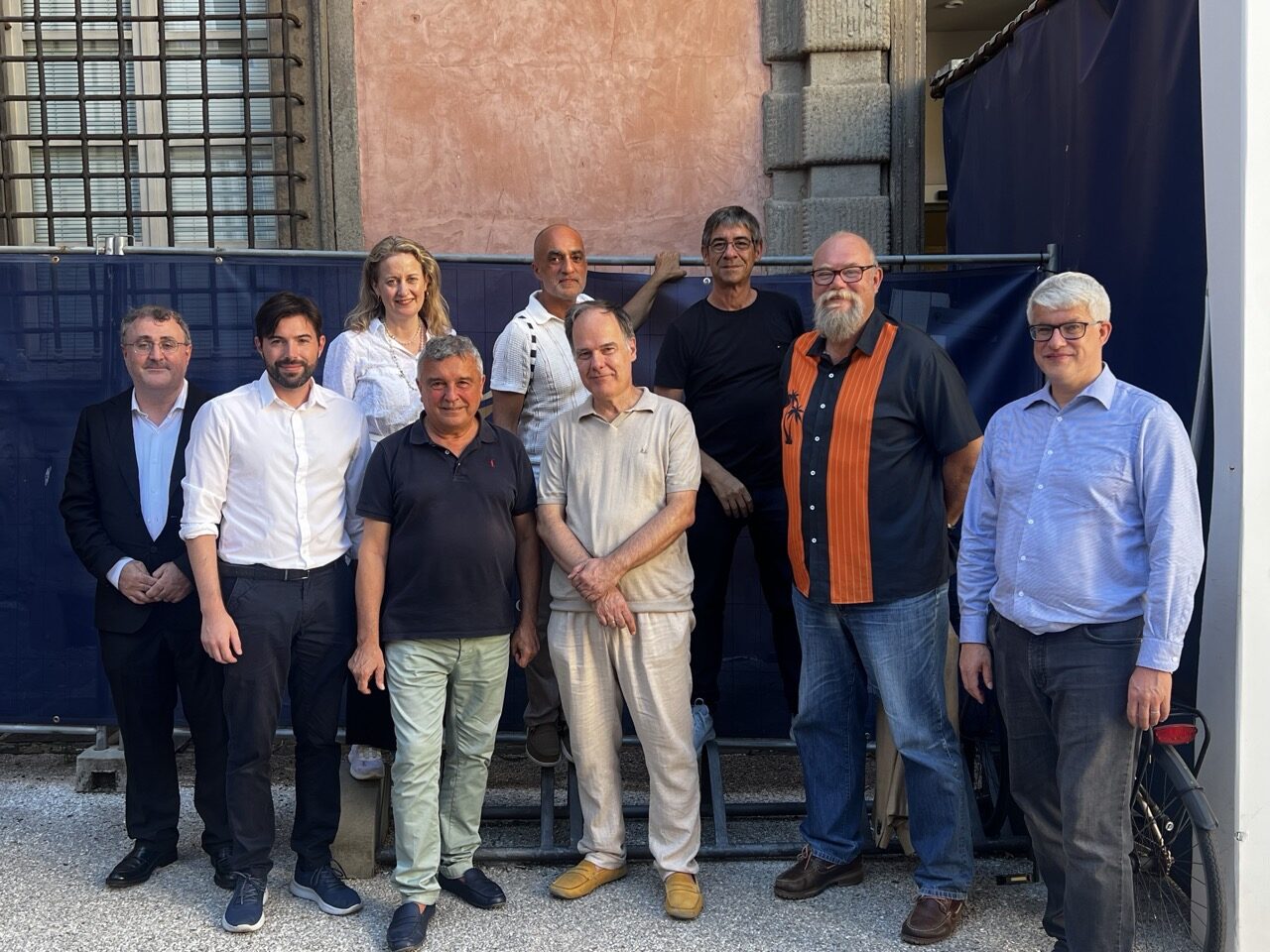
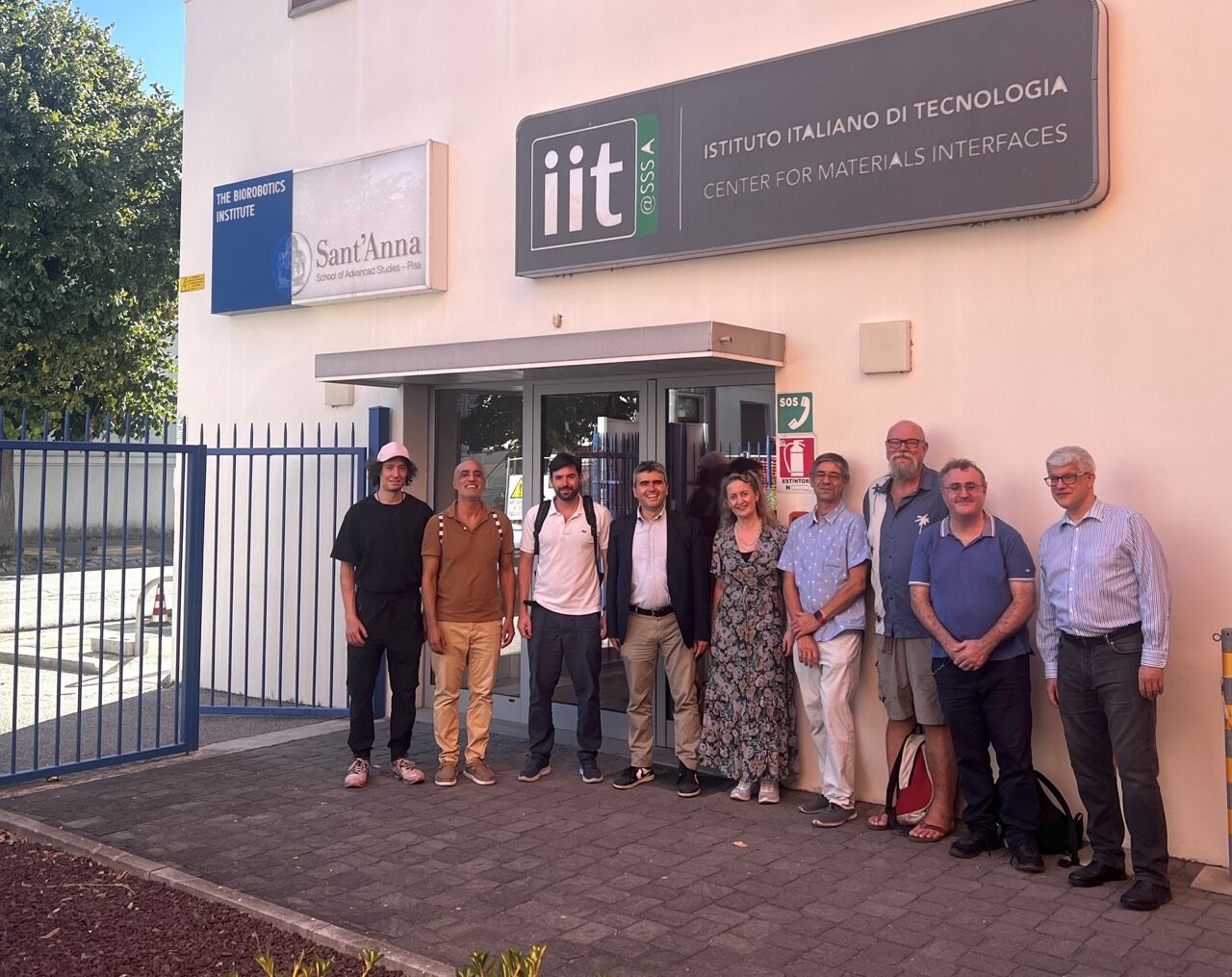
 Matthias Bertsch, Alexandra Türk-Espitalier, Tina Margareta Nilssen, Tobias Großhauser
Motion-Emotion-Lab, Centre for Music Physiology, mdw – University of Music and Performing Arts Vienna, Vienna- Christoph Reuter, Felix Klooss
SInES Lab, Department of Musicology, University of Vienna, Vienna  Calogero Maria Oddo, Veronica Santoro
The BioRobotics Institute, Scuola Superiore Sant’Anna, Pisa- Alessio Nacuzi, Alberto Carratello, Alberto Bologni
Conservatorio di Musica Luigi Boccherini, Lucca - Giorgio Stefano Gnecco
Scuola IMT Alti Studi Lucca, Lucca - Antonio Camurri, Gualtiero Volpe
Casa Paganini – InfoMus, University of Genoa, Genoa  Christoff Zalpour, Nikolaus Ballenberger, Dirk Möller, Elisabeth Grain
Osnabrück University of Applied Sciences, INAP/O, Osnabrück Bronwen Ackermann
The University of Sydney, Sydney
Team and partners in detail → · Photos and posts from the research retreat
Milestones and outputs
Milestones
- April 2026 First results at the symposium Beyond the Score, Salzburg (poster and talk)
- Aug–Sep 2026 Research retreat in Lucca and Pisa
- October 2026 Shared recording protocol, draft v0.6
- November 2026 Pretests of the video assessments for physiotherapists, violin teachers and listeners
- 2027 Pilot studies at several sites and joint research applications
Outputs
- Poster: Healthy Strings: AI-powered posture tracking for violinists (2026)
- Conference paper: SInES Tools, helpers, visualizers as your scientific realizers (DAGA 2026)
- Open recording protocol with sheet music and a video on how to record (YouTube)
- Freely available analysis tools: SInES Tools and PyEyesWeb (MIT licence)
- Recent work by team members on posture and exercise in musicians: literature
Responsible research
Consent and privacy
Recordings only with informed consent. Videos are not published; ratings are pseudonymous.
Describe, not diagnose
Our tools describe movement and sound. Health statements need clinical evaluation and validated evidence.
Ethics at every site
Comparable protocols, ethics procedures and data-protection standards before multi-site recordings.
Open and teachable
Open tools and transparent workflows that students and teachers can use.
Support Healthy Strings
Healthy Strings started in 2026 as an international collaboration and has developed quickly. We are now preparing joint research applications to fund early-career researchers and doctoral projects. Institutions, foundations and partners who would like to support or join the project are welcome to contact us: Healthy-Strings@matthias-bertsch.at.
References
- Kok, L. M., Huisstede, B. M. A., Voorn, V. M. A., Schoones, J. W., & Nelissen, R. G. H. H. (2016). The occurrence of musculoskeletal complaints among professional musicians: A systematic review. International Archives of Occupational and Environmental Health, 89(3), 373–396. https://doi.org/10.1007/s00420-015-1090-6
- Rousseau, C., Zalpour, C., Ackermann, B., & Rennie-Salonen, B. (2026). Instrumental musicians’ playing posture: A scoping review of its conceptualisation and application across interdisciplinary research. Frontiers in Psychology, 17, Article 1831920. https://doi.org/10.3389/fpsyg.2026.1831920
- Zinn-Kirchner, Z. M., Alotaibi, M., Mürbe, D., & Caffier, P. P. (2023). For fiddlers on the roof and in the pit: Healthcare and epidemiology of playing-related problems in violinists. Journal of Multidisciplinary Healthcare, 16, 2485–2497. https://doi.org/10.2147/JMDH.S425406
Hosted by the Austrian Society for Music and Medicine (ÖGfMM), Working Group Science. Project page at the mdw: mdw.ac.at.