Draft v0.6 · October 2026 · feedback welcome
Recording protocol
A short, standardised sequence that violinists can record themselves in the same way at different places – with two cameras, a microphone, a metronome and the sheet music below.
Part of the information for violin experts.
Sheet music
Camera and microphone setup
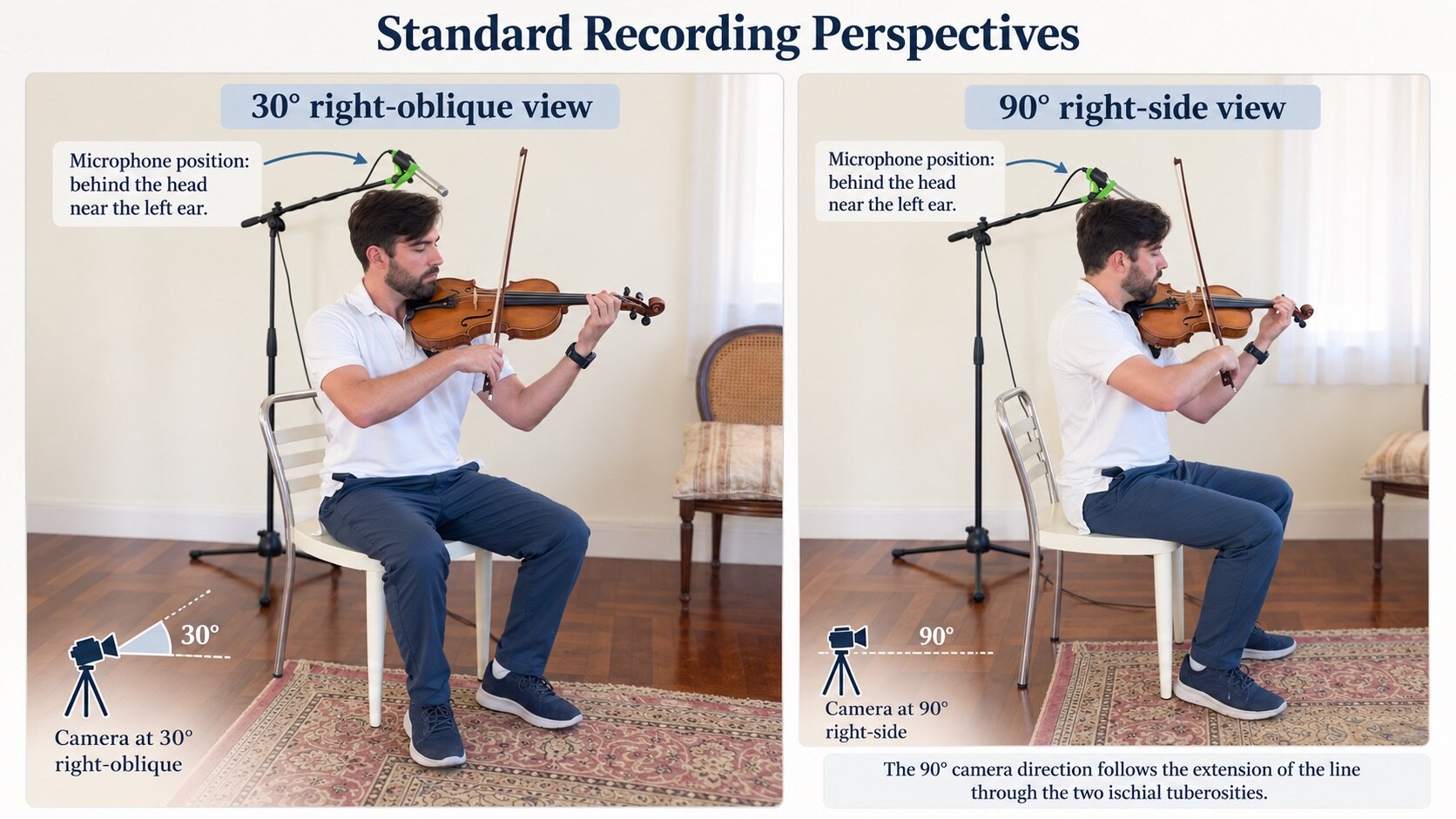
- Two cameras or smartphones on tripods: one at about 30° to the front right, one at 90° from the right side. They must not move during the recording – no zoom, no panning.
- Everything in view: the whole body including the feet, the violin, the left arm and the whole bow, in both views.
- Microphone on a stand behind the head, near the left ear. Without an external microphone, the phone sound is used.
- Sit as in the orchestra on a chair without armrests.
- One clear clap at the start, visible and audible in both cameras – it is used to synchronise the videos and the sound.
- If possible: 1080p, a constant frame rate (60 fps recommended), steady light, a calm background.
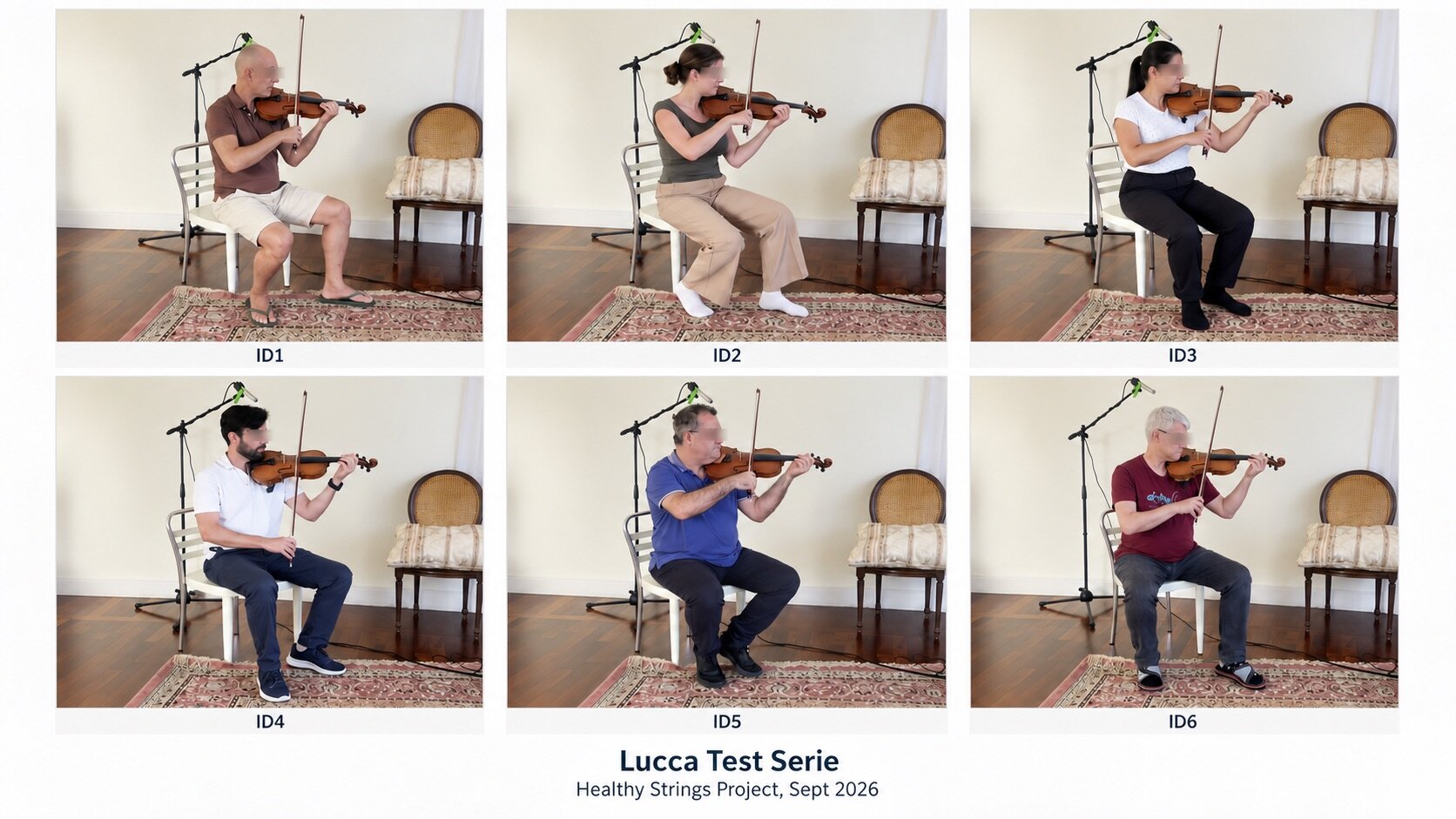
Part 1 – Strictly in time
Metronome at 60 beats per minute (quarter note = 60, one beat per second), 2/4 time. Count “1, 2” aloud before you start. A new task begins every few bars; the rests in between let you prepare. Part 1 takes 62 bars, about two minutes.
- Open E string, long note (mf)
- Two strings D–A détaché (orange)
- Two-string D–A détaché (mini banana)
- Four strings arpeggio legato (banana)
- Two-string D–A legato (lying eight)
- Dotted détaché bowing on one string, f (full bow speed)
- Staccato on one string (downbow sinus)
- Two-string D–A détaché, fingered (fingering, intonation)
- Four-string arpeggio, legato, fingered (fingered banana, intonation)
- Two-string D–A legato, fingered
- Whole-bow G major scale
- Vibrato on a long note
- Tremolo on a G major arpeggio (ff)
The words in brackets are the names of the bowing figures printed in the score.
Part 2 – Play music
Before each excerpt, take a breath and feel free with the timing – the metronome numbers in the score are only an option. Count “1, 2” in your own tempo one bar before you start.
- J. Massenet: Méditation from Thaïs
- W. A. Mozart: Violin Concerto in A major, K. 219
- P. I. Tchaikovsky: Violin Concerto in D major, Op. 35
After the recording
Stop both cameras and the microphone. The two videos and the sound file belong together – please keep their original files unchanged.